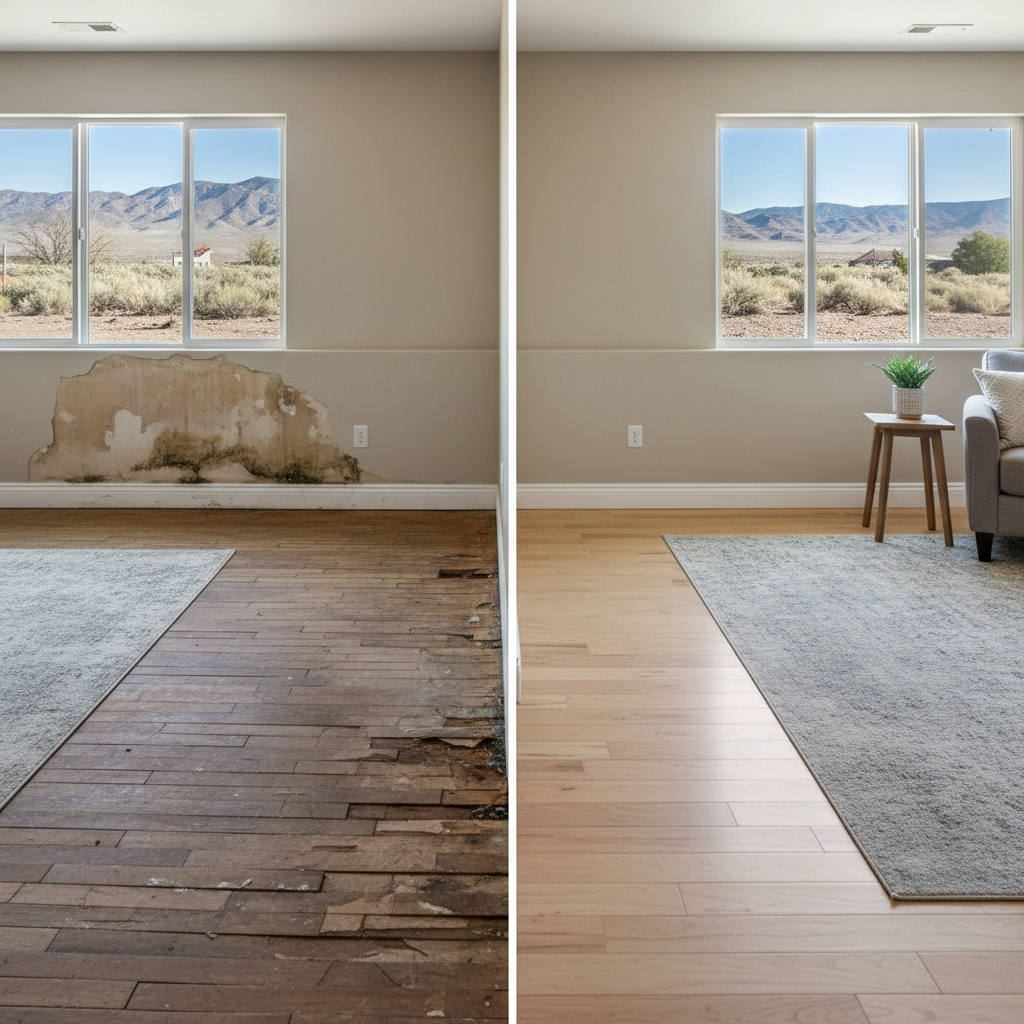
Water inside your living room or basement changes everything very quickly. When you are standing on soaked carpets or staring at warped drywall after a heavy spring melt or a sudden cloudburst near Utah Lake, you have to make a fast choice. Do you go with a full structural dry-out using heavy-duty commercial gear, or do you tear out the damaged materials and rebuild from scratch?
The Full Structural Dry-Out Approach
Drying in place means keeping your walls, framing, and subfloors intact while pumping high-volume air movers and dehumidifiers through the space. Bright Valley Restoration Company uses specialized meters to track the moisture trapped behind baseboards and inside wall cavities until everything returns to baseline. The biggest draw here is avoiding a massive construction mess. You keep your existing finishes, and the downtime is usually shorter.
Cost-wise, Water Damage Restoration through drying in place has a lower upfront price tag because you are paying for equipment runtime and monitoring rather than new building materials and finish carpentry. However, it only works if we catch the water early. If stagnant water sits too long in the heavy clay soils common around Goshen, materials absorb too much moisture, and the risk of hidden mold spikes drastically. You also have to trust that the insulation and framing dried completely down to the core.
The Surface Tear-Out and Replacement Route
Tearing out drywall, flooring, and compromised insulation is messy, noisy, and disruptive. But sometimes it is the only sensible path forward. When floodwaters carry silt and contaminants into your home, porous materials like drywall and carpet padding cannot be safely salvaged. Ripping everything out down to the studs lets us sanitize the framing and verify that no hidden pockets of moisture remain trapped behind your walls.
The downside is clear: the initial price is higher, and you will deal with weeks of construction dust, painting, and rebuilding. On the flip side, your durability goes way up. You get brand-new materials, zero risk of lingering hidden mold spores, and a clean slate. Over time, Water Damage Restoration done this way can save you from recurring air quality issues and structural rot.
Which Way Should You Go in Utah?
Here in Goshen, our dry summer heat combined with freezing winters puts a lot of stress on our houses. If the water was clean—like a broken supply line—and we get to it immediately, saving the structure through aggressive drying is usually the smart play. But if the water came from outside or sat for more than 48 hours, partial or full tear-outs are safer for your family's health.
Bright Valley Restoration Company always looks at the specific source of the water and the extent of the saturation before recommending a path. Give us a call when you are facing Water Damage Restoration needs in Goshen, and we will help you figure out the most cost-effective and safe way to put your home back together.